



AI Features Now Running Across Meta’s Apps

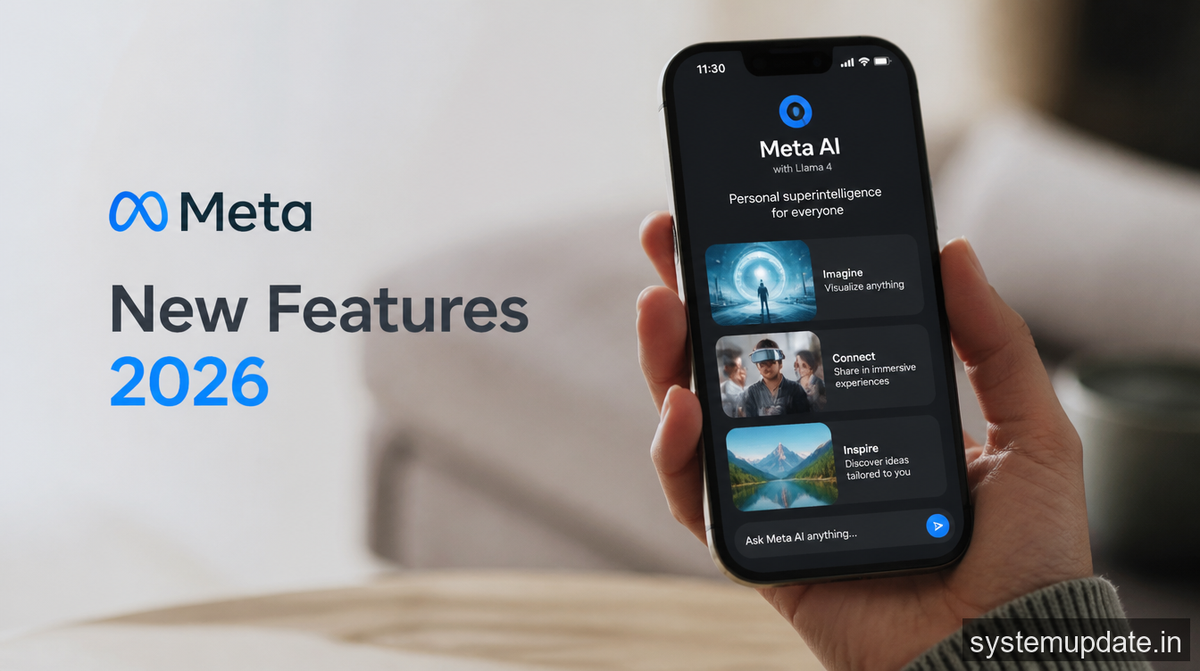
Meta AI got bolted onto Facebook, Instagram, and WhatsApp throughout 2025, but in 2026 the assistant actually became useful for more than answering random trivia.
The big shift: Meta AI now understands context across your conversations. Ask it to help plan a trip in WhatsApp, then reference those details when you’re drafting an Instagram caption. It remembers. That sounds small, but if you’ve been bouncing between apps like a normal person, you know how annoying it is to re-explain things.
Facebook’s AI search bar now pulls from your own posts and photos, not just public content. So when you type “that photo from Barcelona,” it actually finds your Barcelona photo instead of serving you a Wikipedia page about Barcelona.
Instagram got a few creator-focused AI tools. The AI can suggest Reels audio based on your video content. It can generate caption variations. Some users in beta are seeing AI-editing suggestions that actually match their aesthetic instead of looking like clip-art vomit.
WhatsApp’s AI is where things get interesting for business users. The assistant can now handle appointment booking, answer product q
uestions, and route customers to the right person based on the conversation. Meta’s positioning this as “WhatsApp Business 3.0” without calling it that.
Ray-Ban Meta Smart Glasses: What’s New
The Ray-Ban Meta smart glasses sold way better than anyone expected. Meta reported over 1 million units sold by late 2025, and they’ve clearly decided this product category is worth doubling down on.
The 2026 lineup added two new styles to the Wayfarer and Headliner frames. But the bigger news is what’s inside.
Live AI is now native to the glasses. You can point at something, ask “what’s this plant,” and get an answer without pulling out your phone. The response time improved significantly after Meta switched to a more efficient on-device model combined with cloud processing for complex queries.
The audio quality got better. Quieter environments, clearer calls. They’ve also opened up the software development kit to third-party app builders, which means you’ll start seeing integrations with Spotify, translation apps, and navigation tools that work through the glasses.
Meta confirmed they’re working on display capabilities for future versions. No release date yet, but the engineering team is clearly past the prototype phase.
WhatsApp Gets Serious About Business Tools
WhatsApp Business has been a mixed experience for years. Good concept, clunky execution. Meta’s been sanding down those rough edges throughout 2025 and 2026.
The catalog feature got a major overhaul. Businesses can now link their catalogs directly to their website, and products update automatically when inventory changes. For small businesses running their operations through WhatsApp, this eliminates a lot of manual busywork.
Checkout inside WhatsApp is expanding to more countries. Customers can buy products without leaving the chat. Meta takes a small transaction fee, naturally, but the friction reduction is real.
The bigger change: WhatsApp now supports rich links that show product images, prices, and availability directly in messages. No more “check the website” links that nobody clicks.
For customer service, Meta introduced AI-powered response suggestions that learn from your business’s tone. The AI doesn’t replace you, but it drafts responses that sound like you, not like a chatbot.
Privacy and Control Features Nobody Talked About
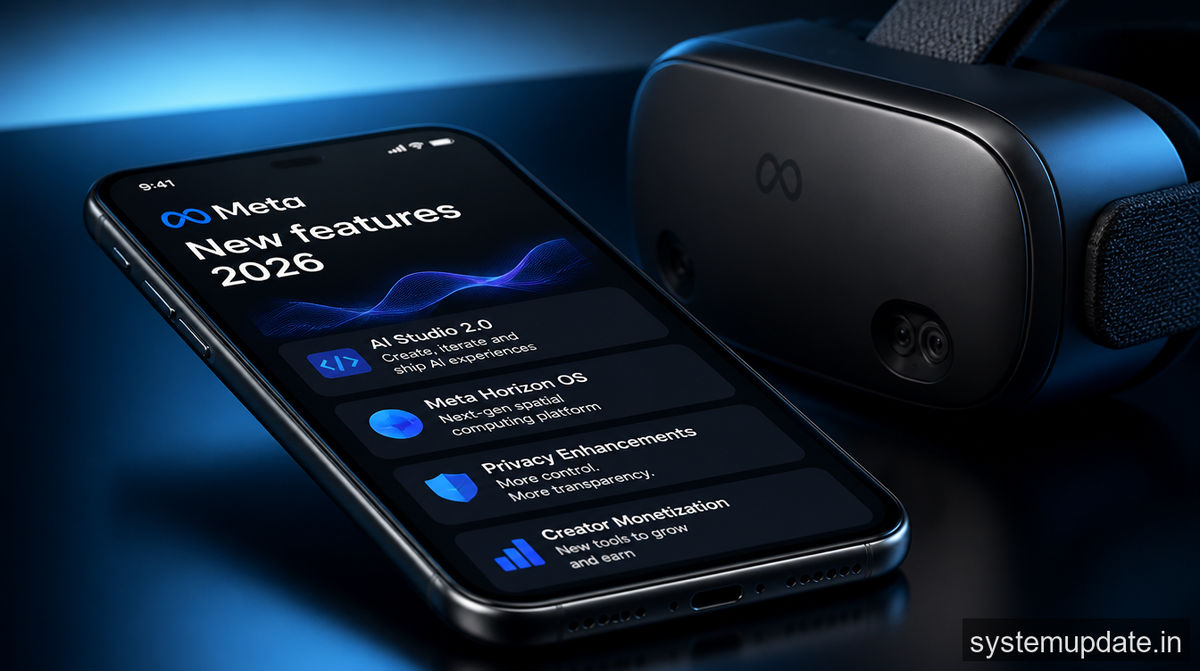
Meta announced a privacy toolkit refresh alongside the flashier AI news. Most tech press ignored it, which is a shame because some of these features are actually useful.
Your activity off-Meta apps can now be disconnected from your ad profile with one click. Meta calls it “Activity Controls 2.0.” You can see exactly which apps are sharing data, which aren’t, and adjust permissions without hunting through three different settings menus.
Facebook’s download-your-data tool now exports in formats that actually work. Your photos come with metadata intact. Your messages include timestamps and media. Previous exports were sometimes corrupted or incomplete.
Instagram added granular control over which followers see which posts. You can now create lists that exclude certain people from specific content without hiding your entire profile. Creators have been asking for this since 2019.
Meta also quietly rolled out end-to-end encryption
for Facebook Messenger group chats. That was the last major messaging surface in their ecosystem without it. Took them years, but it’s there now.
Creator Monetization: What’s Actually Changed
The Creator Economy features Meta announced in early 2026 weren’t revolutionary, but they’re meaningful if you’re making money (or trying to) on their platforms.
Instagram Reels now has a revenue share model that actually pays out for smaller creators. Meta reduced the minimum follower threshold and changed how engagement metrics factor into payouts. Some creators saw 20-30% more from Reels bonuses compared to 2025.
Facebook introduced “Stars 2.0” with better payout rates and lower minimum cash-out thresholds. The old system required $100 minimum; it’s now $25.
Subscriptions on Facebook and Instagram got more flexibility. Creators can now offer tiered subscriptions with different perk levels. Meta also added subscriber-only Stories and Reels, which creators had been requesting for over a year.
The Meta Business Suite finally lets you manage all your creator tools from one dashboard. Monetization analytics, subscriber management, and content scheduling in the same place. Took them long enough.
Frequently Asked Questions
What are the main Meta AI features in 2026?
Meta AI now works across Facebook, Instagram, and WhatsApp with improved context understanding. Key features include cross-app memory (so you don’t re-explain things between conversations), AI-powered search that pulls from your own content, caption generation for Instagram, and business automation tools for WhatsApp.
Did Meta release new smart glasses in 2026?
Meta added new styles to their existing Ray-Ban Meta lineup in 2026. The bigger update is Live AI integration directly in the glasses, improved audio quality, and an open SDK that lets third-party developers build apps for the platform.
How has WhatsApp Business changed in 2026?
WhatsApp Business in 2026 features improved catalog management with automatic inventory syncing, in-chat checkout in more countries, rich product links that show images and prices directly in messages, and AI-powered response suggestions that learn your business tone.
Are there new privacy features on Meta platforms?
Yes. Meta rolled out “Activity Controls 2.0” for easier data sharing management, fixed their data export tool so files actually work properly, added Instagram follower list controls for specific posts, and extended end-to-end encryption to Facebook Messenger group chats.
How can creators make money on Meta platforms in 2026?
Instagram Reels now has better revenue share for smaller creators with lower threshold requirements. Facebook introduced improved Stars payouts with a $25 minimum cash-out. Subscriptions on both platforms support tiered perk systems, and a unified Meta Business Suite brings all creator tools into one dashboard.
Final Thoughts
Meta’s 2026 features aren’t revolutionary, but they’re practical. The AI tools actually work now. The business features remove real friction. The creator monetization is finally worth caring about.
Your next move: pick one feature from this list that affects your daily use, spend 10 minutes actually exploring it. Most people read these articles and change nothing. You don’t have to be that person.
