



I’ve been running Linux on my personal machines since 2012, and every year I tell myself the pace of change is slowing down. Every year I’m wrong. 2026 is no exception. If you’re managing Linux systems professionally or just curious about where the ecosystem is heading, here’s what’s actually notable this year.
Kernel Developments Worth Your Attention
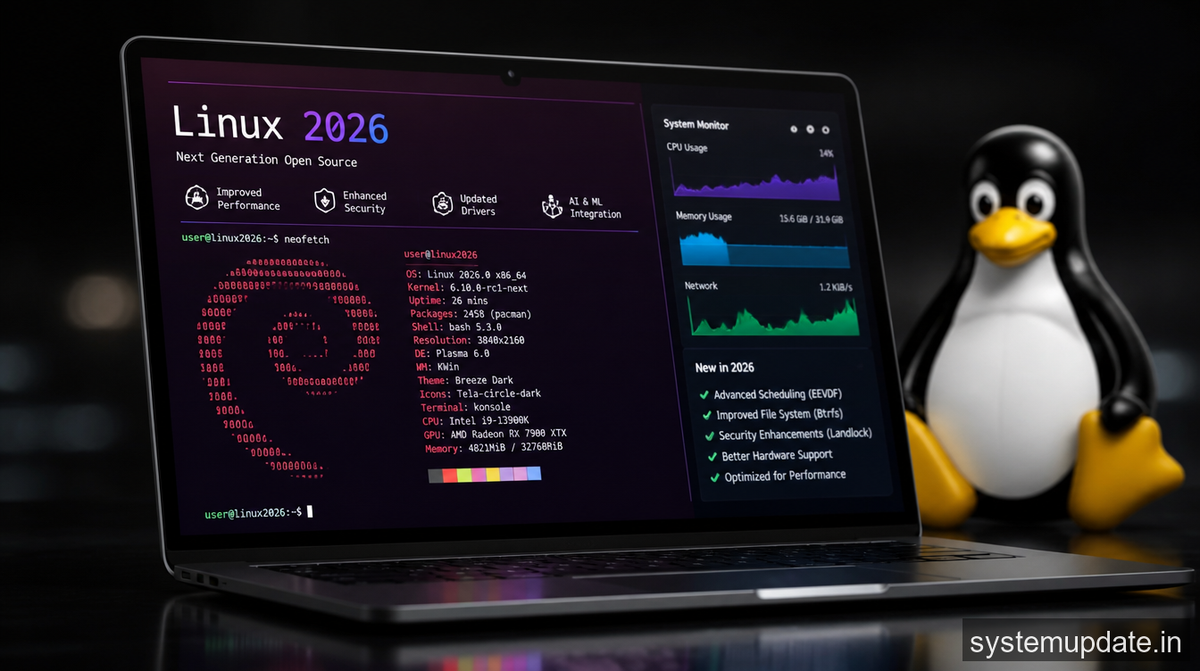
The Linux kernel continues its steady evolution. The 6.x series has matured significantly, and unless you’re running something exotic, upgrading is now genuinely low-friction for most workloads.
Memory management got a serious overhaul. The kernel’s handling of large memory systems improved substantially, which matters if you’re running databases or container workloads. Page table isolation received further hardening after the speculative execution vulnerabilities that plagued processors the last few years.
What I find more interesting is what didn’t change. The fundamental architecture decisions from earlier kernels remain solid. The kernel team focused heavily on incremental improvements rather than flashy rewrites, which is exactly what production systems need.
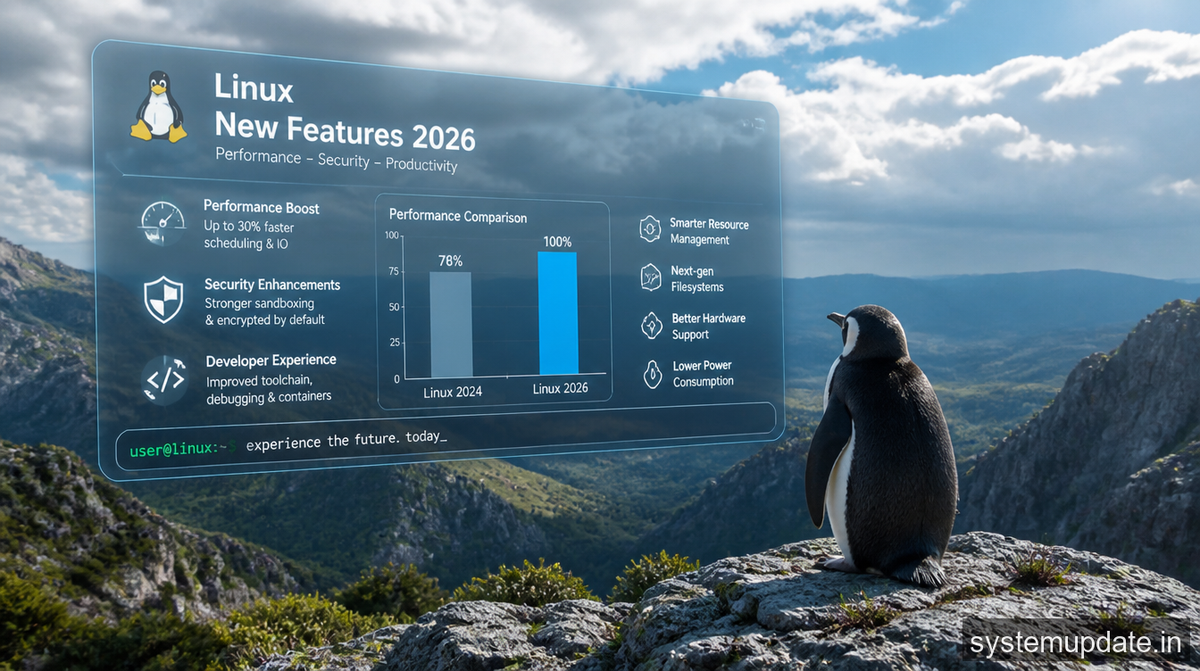
Rust Integration is Actually Happening
This isn’t hypothetical anymore. Rust code started appearing in the mainline kernel in 2024-2025, and by 2026 there’s meaningful Rust components shipping in production kernels.
The initial focus is on drivers and memory-safe subsystems where bugs cause the most serious security issues. AMD and Intel have both contributed Rust-based driver code. It’s not rewriting everything in Rust overnight, but the groundwork is laid.
If you’re wondering whether this affects you: probably not directly yet, but it will shape kernel development over the next 5-10 years. The memory safety guarantees matter for security. That’s the whole point.

Security Keeps Getting Tighter
Linux security used to be an afterthought for many deployments. That’s changing fast.
SELinux and AppArmor saw refinements. The biggest shift I notice is more systems shipping with secure boot chains by default. Fedora and openSUSE have led here, and other distributions are catching up.
eBPF has become central to security monitoring. The ability to trace system behavior without loading kernel modules is a game changer for production environments. Companies running eBPF-based security tools report catching exploits they would have missed five years ago.
The kernel’s lockdown mode got more granular. If you’re concerned about credential theft or rootkit-style attacks, this matters. It’s not flashy, but it’s practical.
Cloud and Container Shifts
If you run Kubernetes, this affects you directly.
The kernel’s support for cgroups v2 is now universal across major distributions. This means resource management in containers works more predictably, especially for memory and IO constraints. The pain points from cgroups v1 limitations are fading.
Rootless containers got easier to run. You can now run full container stacks without root privileges in more scenarios, which matters for multi-tenant environments and CI/CD pipelines.
Cloud providers continue optimizing kernel builds for their specific hardware. AWS, GCP, and Azure all ship custom kernels tuned for their infrastructure. The performance differences are measurable if you’re running at scale.
Frequently Asked Questions
Is Linux still free to use in 2026?
Yes. The kernel remains under GPLv2. What changed is the ecosystem around it. Enterprise support from Red Hat, SUSE, and others is more mature. The “free as in beer” versus “free as in speech” distinction matters less now because the tools are so accessible either way.
Should I upgrade my production servers to the newest kernel?
It depends on your risk tolerance and what’s running on them. Incremental upgrades within your distribution’s supported versions are safe. Jumping across multiple major versions needs testing. Most production environments I see run on point releases two or three versions behind current.
How does Rust in the kernel affect system administrators?
Not immediately. The transition is measured in years, not months. Eventually it means fewer security vulnerabilities in kernel code, which translates to less patching urgency. That’s the theory anyway.
What’s the practical benefit of eBPF in 2026?
Observability without performance cost. You can trace network packets, syscalls, or scheduler behavior in production without introducing significant overhead. It’s replaced many use cases where we’d previously instrument with separate agents.
Which Linux distribution should I use in 2026?
Depends on your needs. Fedora or Arch for bleeding edge. Ubuntu LTS for stability with commercial support. Debian for pure open source philosophy. Alpine for containers. The “best” answer stopped existing years ago. Pick based on your context.
Final Thoughts
If you’re running Linux in production, the upgrades this year are worth applying but not dramatic enough to require immediate action. The security and container improvements matter most. Patch, test, and move forward at your normal cadence.
The kernel team continues doing what they do best: steady refinement rather than revolutionary changes. That’s exactly what infrastructure needs.
Article written by Harsh Mahilang at System Update India.
