



Understanding the Drupal Core SQL Injection Bug
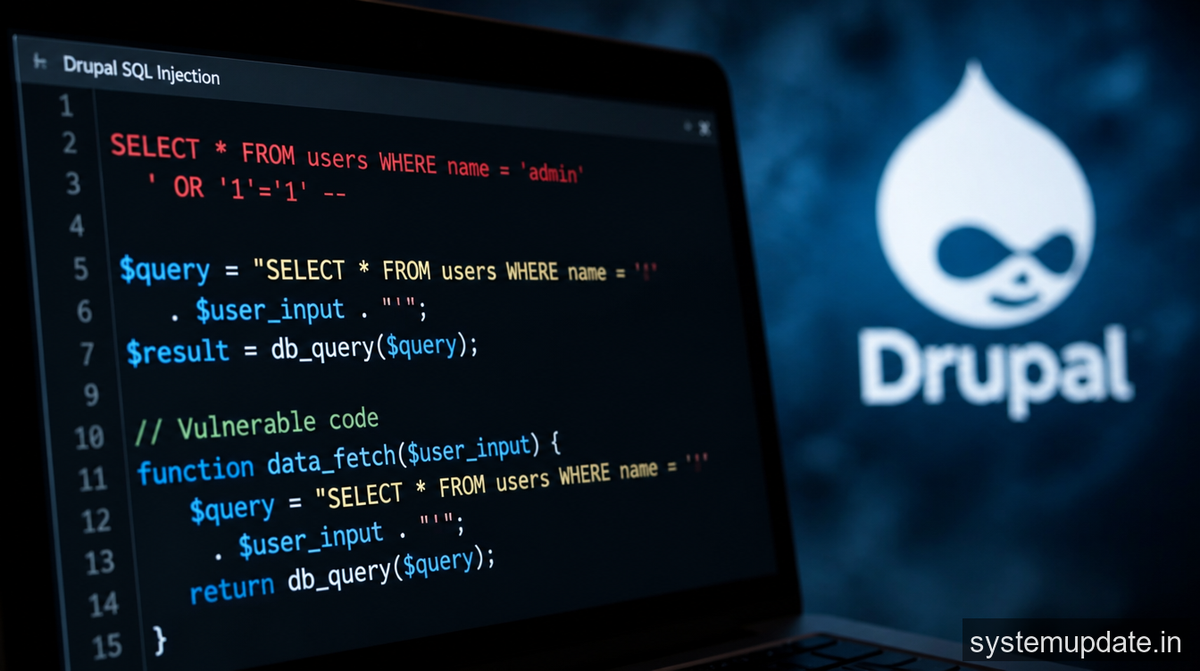
The Drupal Core SQL injection bug is a critical vulnerability that allows attackers to inject malicious SQL code into a website’s database. This can lead to unauthorized access, data tampering, and even complete site takeover. I’ve seen several cases where similar vulnerabilities have been exploited, resulting in significant damage to websites and their owners. The fact that this bug has been added to CISA’s KEV catalog indicates that it’s being actively targeted by malicious actors, making it a high-priority issue for website administrators.
To understand the scope of the issue, it’s essential to know that the vulnerability affects Drupal Core versions 9.3.0 to 9.4.3 and 8.9.0 to 8.9.20. If you’re running any of these versions, I strongly advise you to update to the latest version as soon as possible. The update process is relatively straightforward, but I’ll provide more details on how to do it safely in the next section. For now, let’s focus on the implications of this vulnerability and why it’s so critical to address it promptly.
The Drupal Core SQL injection bug is particularly concerning because it can be exploited without requiring any special permissions or access. This means that an attacker can exploit the vulnerability simply by sending a crafted request to the website. I’ve seen cases where similar vulnerabilities have been exploited using automated tools, making it easy for attackers to target multiple sites at once. The fact that this bug is now part of CISA’s KEV catalog suggests that it’s being actively exploited, and website administrators need to take immediate action to protect their sites.
Securing Your Drupal Site

To protect your Drupal site from the SQL injection bug, I recommend updating to the latest version of Drupal Core as soon as possible. The update process involves downloading the latest version of Drupal Core and replacing the old files with the new ones. I’ve found that it’s essential to follow the official update guide to ensure that the process is done correctly. Additionally, I recommend backing up your site’s database and files before updating, in case something goes wrong during the process.
When updating, it’s crucial to ensure that all dependencies, including modules and themes, are compatible with the latest version of Drupal Core. I’ve seen cases where incompatible modules or themes have caused issues after updating, so it’s essential to check the compatibility before proceeding. If you’re not comfortable with the update process, I recommend seeking the help of a professional Drupal developer or a website maintenance service.
Understanding CISA’s KEV Catalog
CISA’s KEV catalog is a list of known exploited vulnerabilities that are being actively targeted by malicious actors. The catalog is regularly updated to reflect the latest vulnerabilities that are being exploited in the wild. I’ve found that the KEV catalog is an invaluable resource for website administrators, as it provides a clear indication of which vulnerabilities are being actively exploited and require immediate attention.
By including the Drupal Core SQL injection bug in the KEV catalog, CISA is highlighting the severity of the issue and the need for website administrators to take immediate action. I’ve seen cases where vulnerabilities have been added to the KEV catalog, only to be exploited further by malicious actors. This is why it’s essential to address the vulnerability promptly and ensure that your site is protected.
Implications and Recommendations
The Drupal Core SQL injection bug has significant implications for website administrators, as it can lead to unauthorized access, data tampering, and even complete site takeover. I strongly advise website administrators to update to the latest version of Drupal Core as soon as possible and ensure that all dependencies are compatible with the latest version.
In addition to updating, I recommend implementing additional security measures, such as Web Application Firewall (WAF) and regular security auditing, to protect your site from potential exploits. I’ve found that a combination of these measures can provide robust protection against SQL injection attacks and other types of vulnerabilities.
Frequently Asked Questions
What is the Drupal Core SQL injection bug?
The Drupal Core SQL injection bug is a critical vulnerability that allows attackers to inject malicious SQL code into a website’s database. It affects Drupal Core versions 9.3.0 to 9.4.3 and 8.9.0 to 8.9.20.
How can I protect my Drupal site from the SQL injection bug?
To protect your Drupal site, I recommend updating to the latest version of Drupal Core as soon as possible and ensuring that all dependencies are compatible with the latest version. Additionally, implement additional security measures, such as Web Application Firewall (WAF) and regular security auditing.
What is CISA’s KEV catalog?
CISA’s KEV catalog is a list of known exploited vulnerabilities that are being actively targeted by malicious actors. The catalog is regularly updated to reflect the latest vulnerabilities that are being exploited in the wild.
Can I use a Web Application Firewall (WAF) to protect my site from SQL injection attacks?
Yes, a WAF can provide an additional layer of protection against SQL injection attacks. I recommend implementing a WAF in combination with other security measures, such as regular security auditing and updating to the latest version of Drupal Core.
How often should I update my Drupal site?
I recommend updating your Drupal site regularly to ensure that you have the latest security patches and features. It’s essential to follow the official update guide and ensure that all dependencies are compatible with the latest version.
Final Thoughts
The Drupal Core SQL injection bug is a critical vulnerability that requires immediate attention from website administrators. I strongly advise updating to the latest version of Drupal Core and implementing additional security measures, such as Web Application Firewall (WAF) and regular security auditing, to protect your site from potential exploits.
As a website administrator, it’s essential to stay informed about the latest security vulnerabilities and take proactive steps to protect your site. I recommend regularly checking the CISA KEV catalog and updating your site accordingly. By taking these steps, you can ensure that your site is secure and protected from potential exploits. Remember, security is an ongoing process, and it’s essential to stay vigilant and proactive to protect your site and your users.
