


I remember when Jio first launched its unlimited 5G service back in 2022. It felt revolutionary. No data caps, no throttling, just pure speed on tap. Fast forward to 2026, and that era is quietly coming to an end. Both Jio and Airtel have been shifting their strategies, and if you’re on one of their 5G plans, you need to know what’s actually changing.
The Unlimited 5G Era Is Fading
Jio introduced free 5G services initially as a promotional thing, then bundled it with select prepaid plans. Airtel followed with its own 5G Plus service. For a couple of years, millions of users got unlimited 5G access without paying extra. That model was always going to be temporary.
Telecom companies can’t sustain offering genuinely unlimited high-speed data forever. The infrastructure costs are massive, and margins are thin. What we’re seeing now is the inevitable correction.
What Jio Is Doing
Jio has been gradually restructuring its 5G offerings. Instead of truly unlimited data, they’ve introduced tiered plans with fair usage policies. The Rs 399 plan now includes 5G but with a 2GB daily cap. Go above that and you’re looking at reduced speeds after midnight.
The company has also launched premium plans that promise “unlimited” 5G, but dig into the terms and you’ll find data caps that reset monthly. They call it unlimited in marketing, but technically you’re getting a large allocation, not unlimited access.
Jio’s strategy seems clear. They’re moving users away from the perception of truly unlimited 5G toward plans that look generous but have defined boundaries. The messaging around 5G has shifted from “it’s included” to “upgrade to unlock.”
What Airtel Is Doing
Airtel’s approach has been slightly different. Rather than directly cutting unlimited 5G, they’ve been bundling it with higher-tier plans and slowly making the entry-level 5G experience less attractive.
The Airtel 5G Plus service is still available, but it’s increasingly tied to plans above Rs 499. Users on cheaper plans get 5G access with a 1GB daily limit, which sounds generous until you actually try to use it for streaming, gaming, and browsing all day.
Airtel has also been pushing its Xstream fiber integration, pushing users toward bundled broadband and mobile plans. If you have both, you get more data. Standalone 5G users are getting less value comparatively.
What This Means for Your Bill
Here’s the practical impact. If you were enjoying truly unlimited 5G on Jio or Airtel, your effective bill is probably going up in some way. Either through plan upgrades, data cap overages, or the need to buy add-on packs.
The average user won’t notice immediately. Most people don’t hit 2GB daily anyway. But power users, those who stream constantly or work on the go, are feeling the pinch. Add-on packs cost Rs 20-50 for small data top-ups, and those add up.
Some users are switching to Vi or BSNL as alternatives, but honestly, the coverage and speed differences mean Jio and Airtel still dominate in most cities. We’re seeing a duopoly tighten its grip while slightly reducing the free extras.
What’s Coming Next
The trend is clear. Expect more data tiering, more “unlimited” plans with hidden caps, and higher effective costs for heavy 5G users. Both operators are likely testing how much they can push before users revolt.
There’s also the Jio AirFiber and Airtel Xstream expansion to watch. The companies are clearly more interested in locking you into home broadband + mobile bundles than standalone mobile plans. That bundling strategy is where they’re heading.
If you’re smart about this, audit your actual data usage. If you’re not hitting your daily cap, you might actually save money by downgrading to a cheaper plan with 5G access. The “unlimited” label is becoming marketing more than reality anyway.
Frequently Asked Questions
Will Jio and Airtel completely remove 5G from their cheap plans?
Not immediately, but they’re making 5G access increasingly limited on budget plans. Rs 199-299 plans might get 5G only during off-peak hours or with very small daily caps. The trend is toward reserving full 5G for premium plan holders.
Can I still get unlimited 5G in India?
Technically no plan offers truly unlimited high-speed 5G anymore. The closest you’ll find are high-end plans with very high monthly data allocations (200GB+), which most users won’t exhaust. But call it unlimited and you’ll find fair usage policy language buried in the terms.
Is switching from Jio to Airtel worth it for 5G?
Both are converging on similar strategies. Airtel’s network might be slightly better in some circles, Jio’s coverage broader in others. The difference in 5G terms between them is marginal. You’re not switching to get better unlimited 5G, because neither offers it anymore.
How much data do I actually need for 5G usage?
For moderate use (streaming, social media, some gaming), 50-60GB monthly is usually enough. Heavy users who stream 4K video or download large files regularly might need 150GB+. The key is knowing your actual usage through your phone’s data tracking, not guessing.
Should I wait for any new 5G plans from Jio or Airtel?
Probably not. Any new plans they launch will follow the same tiered model. If anything, waiting might mean you miss current promotions. The era of “unlimited” as a selling point is over. Focus on what actual data you need and find the plan that matches.
Final Thoughts
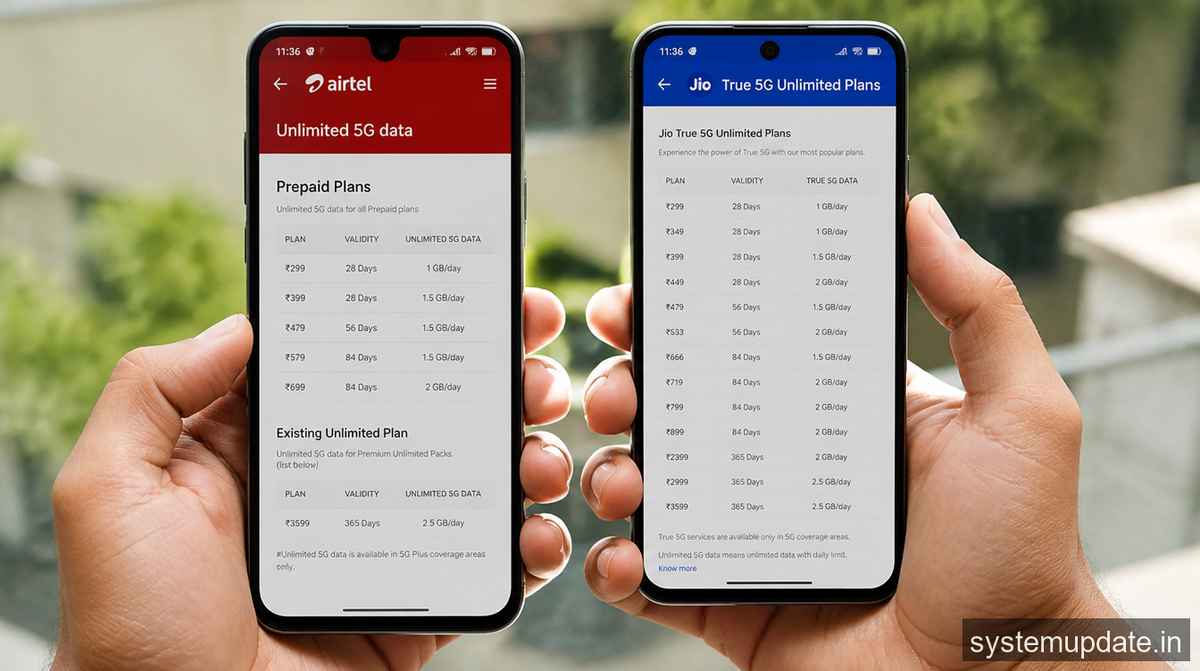
The unlimited 5G era was nice while it lasted. Jio and Airtel got millions of users hooked on 5G speeds, and now they’re extracting value. Your move is simple: check your actual usage, stop paying for data you don’t need, and ignore the marketing around “unlimited.” The real number is what matters, and the real numbers are getting smaller.
Article written by Harsh Mahilang at System Update India.
