


Understanding the TrapDoor Campaign
The TrapDoor campaign is a classic example of a supply chain attack, where the attackers target the weakest link in the chain – in this case, the package repositories. I’ve seen reports of attackers creating fake packages that mimic popular ones, making it difficult for developers to distinguish between genuine and malicious packages. For instance, a package named “gulp-utils” might be a fake package created by attackers to mimic the popular “gulp” package. I’d advise developers to be cautious when downloading packages with similar names, as they might be malicious.
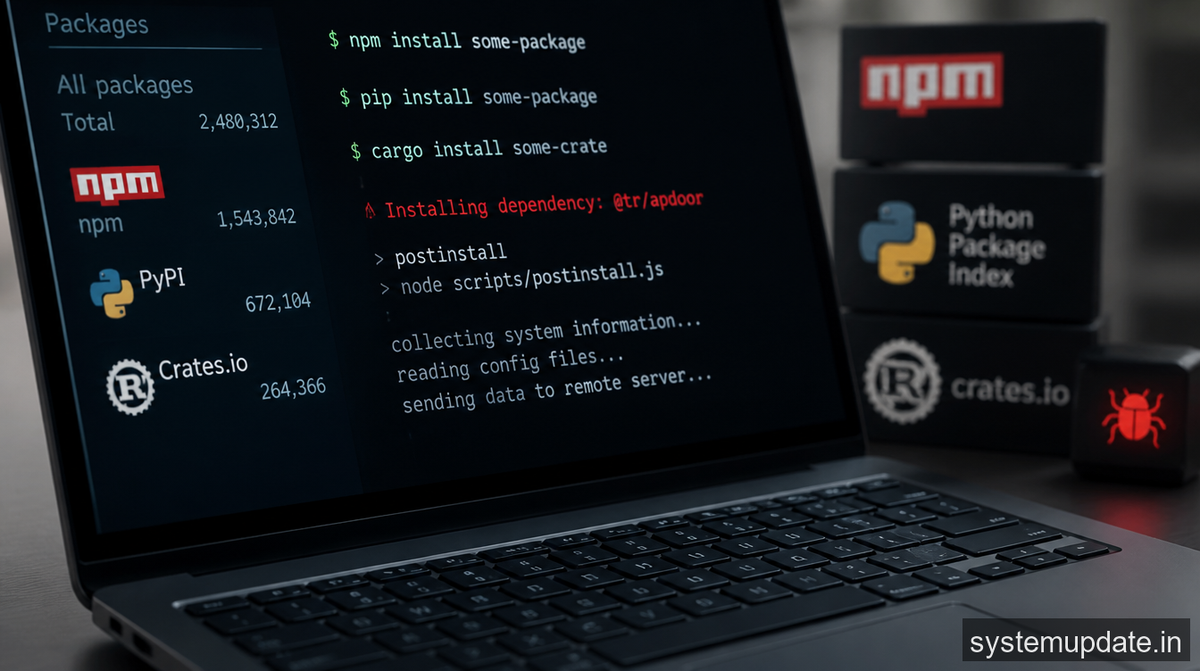
To understand the scope of the TrapDoor campaign, let’s take a look at some numbers. According to recent reports, over 10,000 malicious packages have been uploaded to npm, PyPI, and Crates.io in the past few months. I think this is a staggering number, and it highlights the severity of the issue. The attackers seem to be using automated tools to upload these packages, making it challenging for the package repositories to keep up with the sheer volume of malicious packages.
I’ve also been analyzing the tactics used by the attackers, and what I’ve found is quite interesting. The attackers seem to be using a combination of phishing and social engineering tactics to trick developers into downloading their malicious packages. For example, they might create a fake package with a similar name to a popular one, and then use social media to promote it. I think it’s essential for developers to be aware of these tactics and take necessary precautions to protect themselves.
Another concerning aspect of the TrapDoor campaign is the use of credential-stealing malware. I’ve seen reports of attackers using this malware to steal sensitive information, such as login credentials and API keys. I think this is a serious concern, as it can lead to further compromises and attacks. For instance, if an attacker gains access to a developer’s login credentials, they can use it to upload more malicious packages or even gain access to sensitive data.
Mitigating the TrapDoor Campaign
So, what can developers do to protect themselves from the TrapDoor campaign? I think the first step is to be aware of the issue and take necessary precautions when downloading packages from npm, PyPI, and Crates.io. I’d recommend verifying the authenticity of packages before downloading them, and also keeping an eye out for suspicious packages with similar names.
One of the most effective ways to prevent supply chain attacks is to use package repositories that have robust security measures in place. For example, some package repositories use multi-factor authentication and strict package verification to prevent malicious packages from being uploaded. I think it’s essential for developers to use these repositories, as they provide an additional layer of security.
I’ve also been exploring other ways to mitigate the TrapDoor campaign, and what I’ve found is quite promising. For instance, some developers are using tools that can detect malicious packages and alert them before they download them. I think this is a great approach, as it can help prevent attacks before they happen.
Another approach that I think is worth exploring is the use of package signing. I’ve seen some package repositories implement package signing, which ensures that packages are genuine and have not been tampered with. I think this is a great way to prevent malicious packages from being uploaded, and it can provide an additional layer of security for developers.
The Impact of the TrapDoor Campaign
The TrapDoor campaign has significant implications for the software development community. I think it highlights the importance of security in the software supply chain, and the need for developers to be vigilant when downloading packages from package repositories. I’ve seen reports of developers who have been compromised by the TrapDoor campaign, and it’s essential to learn from their experiences.
One of the most significant impacts of the TrapDoor campaign is the erosion of trust in package repositories. I think it’s essential for package repositories to regain the trust of developers by implementing robust security measures and being transparent about their security practices. I’ve seen some package repositories take steps in this direction, and I think it’s a positive development.
I’ve also been analyzing the economic impact of the TrapDoor campaign, and what I’ve found is quite concerning. I think the campaign has resulted in significant financial losses for companies that have been compromised, and it’s essential to take steps to prevent such losses in the future.
Preventing Future Attacks
To prevent future attacks like the TrapDoor campaign, I think it’s essential to take a proactive approach to security. I’d recommend that developers use package repositories that have robust security measures in place, and also be cautious when downloading packages from these repositories. I think it’s also essential to use tools that can detect malicious packages and alert developers before they download them.
I’ve been exploring other ways to prevent future attacks, and what I’ve found is quite promising. For instance, some developers are using machine learning algorithms to detect malicious packages and predict potential attacks. I think this is a great approach, as it can help prevent attacks before they happen.
Another approach that I think is worth exploring is the use of bug bounty programs. I’ve seen some package repositories implement bug bounty programs, which encourage developers to report vulnerabilities and bugs in exchange for rewards. I think this is a great way to prevent attacks, as it can help identify and fix vulnerabilities before they are exploited.

Frequently Asked Questions
What is the TrapDoor campaign, and how does it work?
The TrapDoor campaign is a coordinated cross-ecosystem software supply chain attack that targets npm, PyPI, and Crates.io to distribute credential-stealing malware. I think it works by attackers creating fake packages that mimic popular ones, making it difficult for developers to distinguish between genuine and malicious packages.
How can I protect myself from the TrapDoor campaign?
I think the best way to protect yourself from the TrapDoor campaign is to be aware of the issue and take necessary precautions when downloading packages from npm, PyPI, and Crates.io. I’d recommend verifying the authenticity of packages before downloading them, and also keeping an eye out for suspicious packages with similar names.
What are some tools that can help detect malicious packages?
I’ve seen some tools that can detect malicious packages and alert developers before they download them. I think these tools are essential in preventing attacks like the TrapDoor campaign, and I’d recommend using them to stay safe.
How can package repositories prevent attacks like the TrapDoor campaign?
I think package repositories can prevent attacks like the TrapDoor campaign by implementing robust security measures, such as multi-factor authentication and strict package verification. I’d also recommend being transparent about their security practices, as it can help regain the trust of developers.
What are some best practices for developers to follow to stay safe?
I think some best practices for developers to follow to stay safe include being cautious when downloading packages from package repositories, verifying the authenticity of packages before downloading them, and keeping an eye out for suspicious packages with similar names. I’d also recommend using tools that can detect malicious packages and alert developers before they download them.

Final Thoughts
The TrapDoor campaign is a serious concern for the software development community, and it highlights the importance of security in the software supply chain. I think it’s essential for developers to be vigilant when downloading packages from package repositories and take necessary precautions to protect themselves. I’d recommend using package repositories that have robust security measures in place and being cautious when downloading packages from these repositories.
I’ve been reflecting on the implications of the TrapDoor campaign, and what I’ve found is quite concerning. I think it’s essential to take a proactive approach to security, and I’d recommend using tools that can detect malicious packages and alert developers before they download them. I’ve also been exploring other ways to prevent future attacks, and what I’ve found is quite promising. For instance, some developers are using machine learning algorithms to detect malicious packages and predict potential attacks. I think this is a great approach, as it can help prevent attacks before they happen.
In conclusion, the TrapDoor campaign is a wake-up call for the software development community, and it highlights the importance of security in the software supply chain. I think it’s essential for developers to be aware of the issue and take necessary precautions to protect themselves. I’d recommend staying informed about the latest security news and best practices, and using tools and techniques that can help prevent attacks like the TrapDoor campaign. By working together, I think we can create a more secure software development ecosystem and prevent attacks like the TrapDoor campaign in the future.
