


Apple dropped iOS 19 at WWDC 2025, and the full public release landed in September 2025. If you’re on an iPhone 15 or later, you’ve had months to poke around. If you’re still on an older device, you might be weighing the upgrade. Either way, I’ll cut through the noise and tell you what actually works, what still feels half-baked, and what matters for your daily phone use.
This isn’t a spec sheet. It’s what I’ve been using for the past eight months.
The Big Siri Overhaul
Apple finally gave Siri a proper redesign. The interface is different now. When you invoke Siri, the whole screen edge glows instead of that little orb bouncing around. It feels less like a party trick and more like something you’d actually use.
But the real upgrade is underneath. Siri now handles multi-step requests without you having to re-explain context. I asked it to “remind me to call Mom when I get home” and it picked up my home address from Contacts without me spelling it out. That kind of cross-app awareness used to require a chain of separate commands.
Live Activities got smarter too. If you’re tracking a delivery, Siri surfaces the info proactively rather than waiting for you to ask. Apple Intelligence powers a lot of this, which means the processing happens on-device for most tasks. Your data isn’t flying off to some server.
The contextual awareness isn’t perfect yet. Siri still stumbles when you mumble or use vague references across apps. But it’s meaningfully better than the version that shipped with iOS 17.
Apple Intelligence Gets Real
Apple Intelligence graduated from beta feature to something you’d actually build your workflow around. Writing tools are genuinely useful now. Summarize an email thread in one tap, rewrite a message in a different tone, or proof-read before sending.
I used the image generation tools more than I expected to. Not for anything serious, but for quick illustrations in notes or for generating visuals that I can then edit with the new Clean Up tool. Clean Up removes unwanted objects from photos. Google Photos has had something similar, but Apple’s version feels more precise on the edge detection.
The integration with Photos and Notes goes deeper. You can search your photo library with natural language (“find the photo from the beach last November”) and it actually returns the right result. No more scrolling through years of images.
Visual Intelligence, which lets you point your camera at something and get information about it, expanded beyond initial object recognition. You can now point at a restaurant and see ratings, hours, and the menu, or at a product and compare prices across retailers. It’s genuinely handy when you’re out shopping.
The biggest limitation is still hardware. Apple Intelligence works best on iPhone 15 Pro and later. If you’re on a base iPhone 15 or an older model, some features won’t run locally, and the on-device experience degrades noticeably.
Control Center and UI Changes
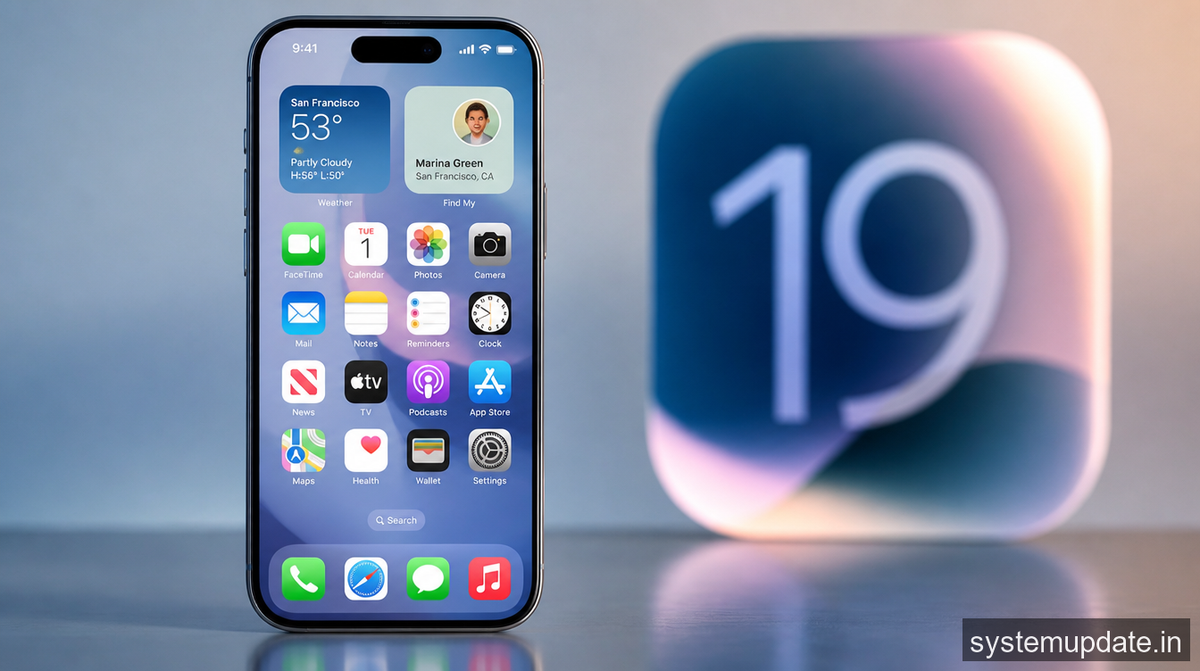
Apple flattened the aesthetic. The icons across the home screen lost the heavy gradients and got replaced with cleaner, more uniform designs. It looks like iOS took notes from visionOS and stripped back some of the visual noise.
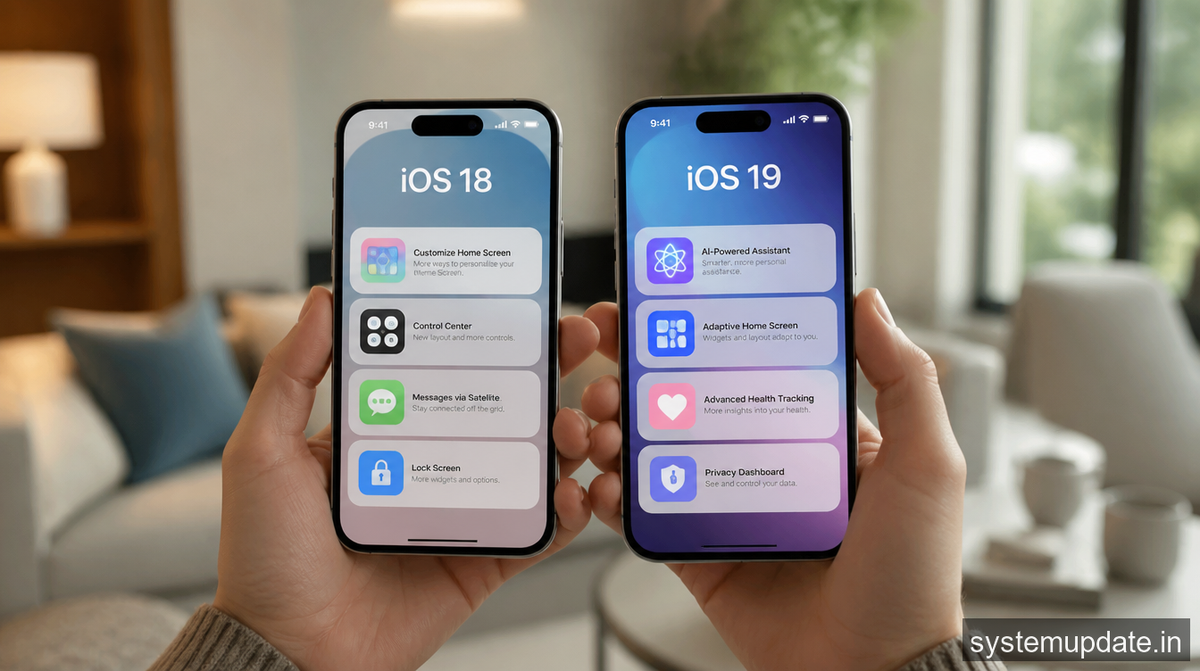
Control Center got a significant layout overhaul. The media controls moved to the top right, smart home devices got their own dedicated section, and connectivity controls (Wi-Fi, Bluetooth, Airplane Mode) are easier to reach without hunting through layers. The grid is more intuitive. You can add and remove controls more easily now.
The Photos app redesigned its UI too. The main view is cleaner, and the search function sits more prominently. The auto-play videos that used to drive me crazy are easier to manage, though the toggle is still buried in settings.
One thing that surprised me: widgets got more interactive. You can now complete tasks directly from certain widgets without opening the full app. Checking off a todo item or skipping a song from the home screen feels like a small thing but it adds up over a day.
Productivity and Communication Tools
Calculator finally arrived on iPad with full functionality, but the real news is what Apple added to the iPhone version. Math Notes lets you handwrite equations and get instant results. You can insert variables, graph functions, and even have it solve unit conversions in real time. If you’re a student or working with numbers regularly, this is one of the most practical additions in iOS 19.
Mail got a complete redesign. Messages now sort into categories (Primary, Transactions, Updates, Promotions) similar to how Gmail has done it for years. Apple was late to this, but the implementation is clean. You can search across your whole inbox with natural language, and it pulls results from message bodies and attachments.
Messages picked up a few notable additions. You can now send and receive messages via satellite if you’re outside cellular coverage. It’s not replacing your main communication method, but if you’re hiking or in an area with no signal, having basic text capability through satellite is reassuring. Taping reactions finally work like they do in WhatsApp, with a long-press to add a reaction to any message.
Voice Isolation calls are notably clearer now. The neural engine does a better job stripping out background noise during Face
Time and regular phone calls. I tested this on a busy street and the person on the other end said my voice came through clearly despite traffic noise in the background.
Frequently Asked Questions
Which iPhones support iOS 19?
iOS 19 requires iPhone XS or later, which covers everything from the 2018 models forward. However, Apple Intelligence features specifically require iPhone 15 Pro or iPhone 15 Pro Max. Older Pro models can’t run the full AI suite even if the base iOS 19 update installs fine.
When did iOS 19 release?
Apple announced iOS 19 at WWDC on June 9, 2025. The public release came on September 16, 2025 alongside the iPhone 17 launch. It’s been available for download since that date.
What’s the biggest change in iOS 19?
The Siri redesign combined with Apple Intelligence is the most substantial shift. The interface change is visible immediately, but the cross-app awareness and natural language processing improvements are what you’ll notice in daily use. The Calculator overhaul with Math Notes is a close second for practical value.
Does Apple Intelligence work offline on iOS 19?
Most Apple Intelligence features run on-device, which means they work without an internet connection. Some cloud-based features, particularly the more complex image generation and advanced writing tools, may route through Private Cloud Compute when local processing isn’t sufficient. The on-device-first approach is a core design principle Apple has stuck with.
Should I upgrade to iOS 19?
Yes, if you’re on iPhone 15 or later and particularly if you use your phone for productivity tasks. The AI features and Math Notes alone justify the update for many users. If you’re on an older device like an iPhone 12, the experience will be solid but you won’t access the full feature set. Make sure you have enough storage space since Apple Intelligence files can add several gigabytes.
Final Thoughts
iOS 19 isn’t a flashy overhaul. It’s a steady refinement of things Apple got right and a serious push into on-device AI. The Siri improvements and Math Notes are the two additions I reach for most often. If you haven’t updated yet, the upgrade is worth your time.
—
Article written by Harsh Mahilang at System Update India.
