


Apple appears to be borrowing one of Android’s smartest security features. According to a new report from 9to5Mac, the company is actively developing an anti-snatching feature for the iPhone that would automatically lock the device the moment it detects being grabbed out of a user’s hand. It’s a direct response to one of the biggest blind spots in iPhone security, and it closely mirrors the Theft Detection Lock feature Google rolled out on Android 15 back in 2024. Here’s everything we know so far, why this matters, and how it could change the way iPhones handle real-world theft.
What the New Theft Detection Feature Does
The reported feature was uncovered in internal iOS code by 9to5Mac, which means it’s still being built and tested rather than ready for public release. The basic idea is straightforward: your iPhone would use its built-in sensors to detect when it’s being snatched, and would lock itself the instant it suspects a theft is in progress.
Specifically, the system is expected to rely on accelerometer data to pick up sudden movements consistent with someone pulling the phone out of your hand and running, cycling, or driving away. That’s the same signature Android’s Theft Detection Lock looks for, and it’s surprisingly effective in real-world conditions because snatching motions tend to be sharper and more violent than normal handling.
Apple’s version, however, may go a step further than Google’s. Reports suggest the system will also factor in proximity data from a paired Apple Watch to help confirm whether the phone is still near its owner. If your iPhone suddenly moves away from your Apple Watch at the same time it registers a snatching-style motion, that’s a much stronger signal that something is wrong than motion alone. It’s the kind of cross-device awareness Apple is uniquely positioned to do, given how tightly the iPhone, Apple Watch, and broader ecosystem are connected.
On top of that, the feature will reportedly tie into the contextual signals Apple already uses for Stolen Device Protection. That means the iPhone could check whether it’s connected to a familiar Wi-Fi network or located at a trusted place like your home or office. If the motion looks like a snatch and the phone has moved away from your Apple Watch and it’s in an unfamiliar location, the system would lock the device and restrict access to sensitive areas like saved passwords, payment settings, and Apple ID changes.
Why This Matters: The Gap in Apple’s Existing Security
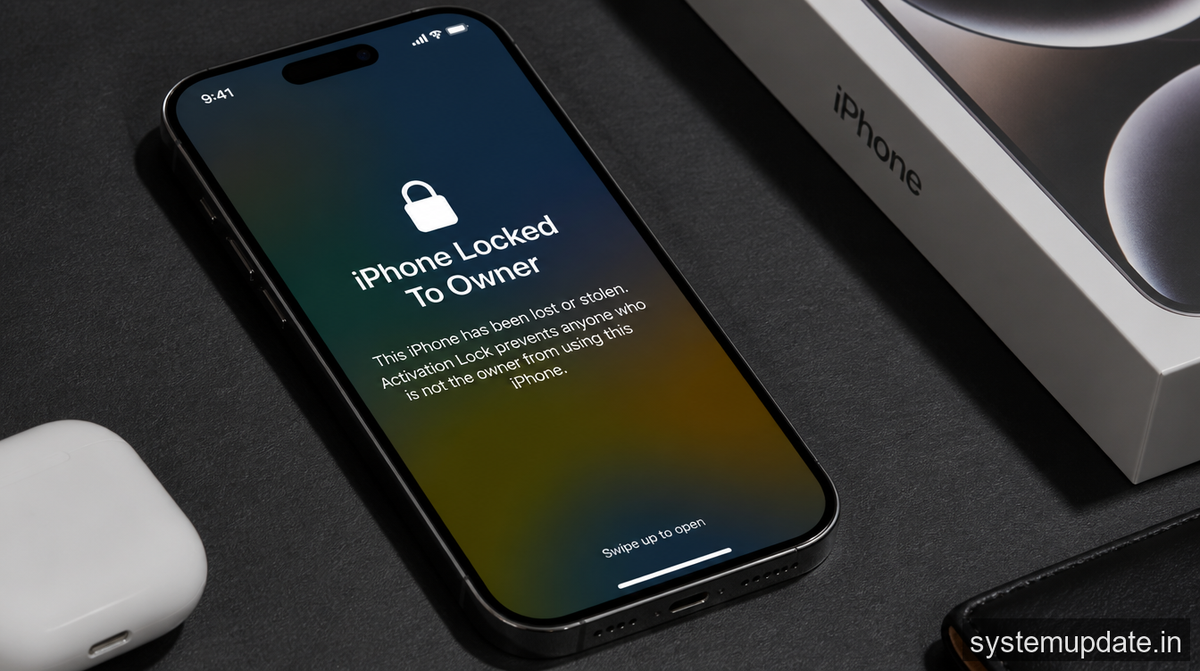
To understand why this feature is a big deal, you have to look at what Apple’s existing security tools actually protect against. The iPhone already has a strong stack of anti-theft features: Find My helps you locate a lost or stolen device, Activation Lock prevents thieves from wiping and reselling it, and Stolen Device Protection (introduced in iOS 17.3 back in early 2024) adds time-based security delays for sensitive actions when the iPhone is away from a trusted location.
But all of those features share one weakness. They’re mostly designed for the scenario where the phone is locked when it’s stolen, or where the thief somehow knows your passcode. Stolen Device Protection, for example, specifically targets the case where someone has watched you type your passcode and then grabs your phone it imposes hour-long waiting periods before they can change your Apple ID or disable Find My.
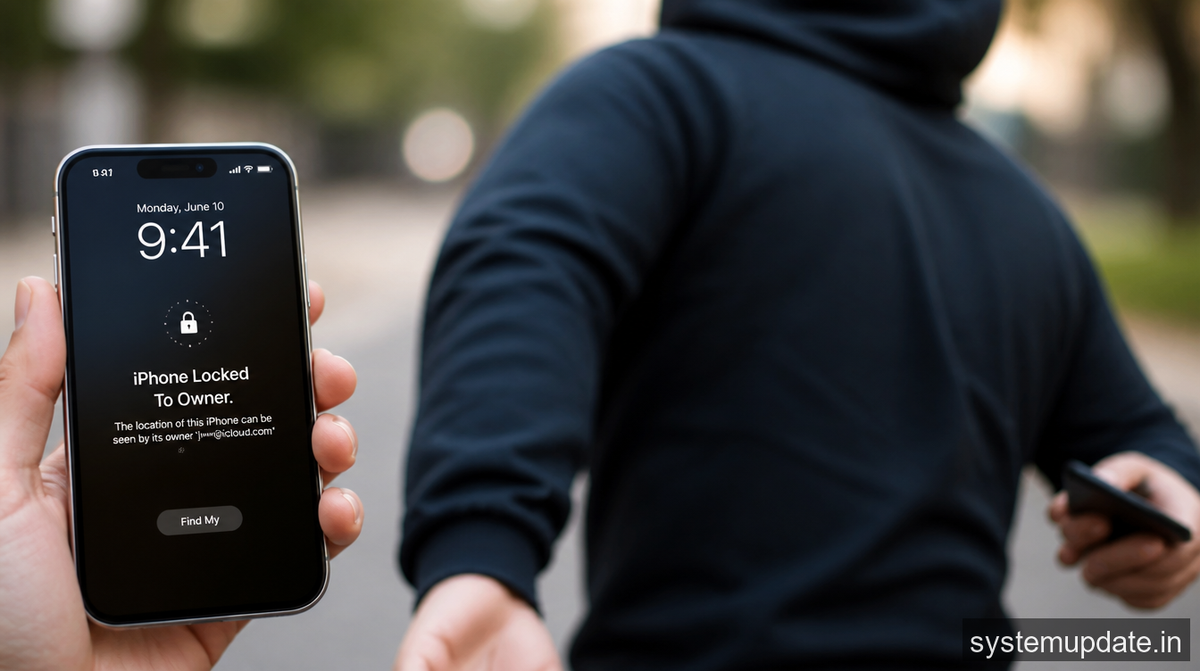
What none of those features cover is the most common real-world theft scenario: someone snatches your phone while it’s already unlocked in your hand. In that moment, the thief has full access to whatever app you happened to be using. They can drain a banking app, send messages, read emails, or just walk away with an unlocked device that gives them several minutes of free rein before it auto-locks. The new theft detection feature plugs that hole directly by locking the iPhone the instant the snatching motion is detected, before the thief can do anything useful with it.
How It Compares to Android’s Theft Detection Lock
If this all sounds familiar, that’s because Google shipped almost exactly the same idea on Android 15 in 2024. Theft Detection Lock uses AI and motion sensors to detect when a phone has been snatched, and automatically locks the screen the moment it spots the telltale pattern of a sudden grab followed by rapid movement. Google first tested the feature in Brazil, which has one of the highest smartphone theft rates in the world, before rolling it out more broadly.
Android’s version uses both the accelerometer and the gyroscope to recognize sudden jerks or jolts followed by acceleration. Google paired it with two other features at launch: Offline Device Lock, which locks the phone if someone tries to keep it disconnected for too long, and Remote Lock, which lets you lock the device from any other phone using just your phone number and a security challenge.
Apple is clearly taking notes here, but the company has a chance to differentiate by leaning on its ecosystem. The Apple Watch proximity check is something Android can’t easily match because the Android wearable space is far more fragmented. If Apple ships this with deep Apple Watch and Stolen Device Protection integration, it could end up being more reliable in practice than Google’s version, even if Apple is technically late to the party.
When Could This Launch?
Apple hasn’t officially announced anything, so there’s no confirmed release date. The feature was spotted in internal code by 9to5Mac, which typically means active development but not necessarily near-term shipping. Some reports suggest it may debut with the iPhone 18 Pro and future foldable iPhones before rolling out to older devices through an iOS update, but that’s still speculation.
The most likely venue for any official announcement would be WWDC 2026, which kicks off with the keynote on June 8. If Apple is planning to ship this as part of iOS 27, that’s where we’d hear about it. Otherwise, it could end up as a later addition during the iOS 27 cycle, similar to how Stolen Device Protection arrived in iOS 17.3 rather than at the original iOS 17 launch.
It’s also worth tempering expectations a bit. Apple has a habit of testing features in code that never ship publicly, or that get held back for multiple cycles before debuting. The fact that this exists in iOS internals doesn’t guarantee we’ll see it in 2026.
My Take
I think this is one of those updates that quietly closes a real gap. Phone snatching is a genuine problem, especially in dense urban areas, and the current iPhone security model has always had this awkward weakness around unlocked devices. It doesn’t matter how strong your passcode is if the thief just grabs your phone mid-scroll.
What I appreciate about Apple’s reported approach is that it isn’t just copy-pasting Android’s feature. The Apple Watch proximity layer and the integration with Stolen Device Protection’s existing contextual checks suggest Apple is trying to reduce false positives which is the main complaint people have had about Android’s version. Nothing kills a security feature faster than it locking your phone every time you set it down on a table too quickly.
The bigger picture is that smartphone security is shifting from “protect the device after it’s gone” to “react in real time as the theft is happening.” Find My and Activation Lock were the first wave. Stolen Device Protection was the second. Real-time motion-based locking, paired with ecosystem signals, is the third. It’s a logical evolution, and it’s good to see Apple finally building toward it.
Frequently Asked Questions
What is the new iPhone theft detection feature?
It’s a reported anti-snatching feature that would use accelerometer data, Apple Watch proximity, and location signals to automatically lock your iPhone if it detects being grabbed from your hand.
Where did this report come from?
The feature was spotted in internal iOS code by 9to5Mac. Apple hasn’t officially confirmed it.
How is this different from Stolen Device Protection?
Stolen Device Protection (iOS 17.3) imposes time delays on sensitive actions when the iPhone is away from a trusted location. The new feature would react in real time to a snatching motion, before the thief has a chance to do anything with the unlocked phone.
Will it work on older iPhones?
That’s not clear yet. Some reports suggest it may launch first on the iPhone 18 Pro and future foldable iPhones, then expand to older models through a software update.
When will it launch?
There’s no confirmed date. WWDC 2026 on June 8 is the most likely venue for any official announcement.
Official Sources
- 9to5Mac original report
- Apple Developer News
- Apple Support: Stolen Device Protection
